Salty Candy: A Cheerful Font for Kids’ Projects
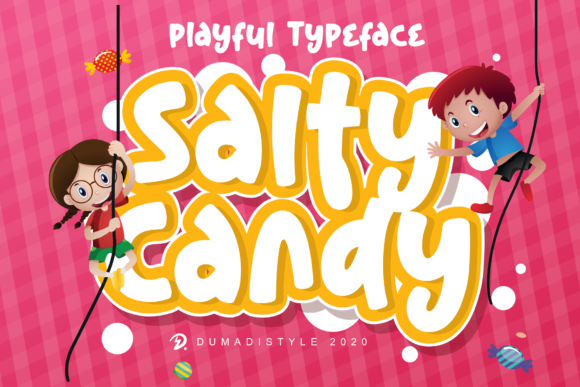
Salty Candy is a children’s font designed with a cheerful and happy feel, making it an excellent choice for projects that aim to evoke warmth and playfulness. This cute display font adds a unique visual touch to various design applications, from t-shirts and logos to web designs and more. Its distinct personality sets it apart in the world of typography, offering designers a versatile tool for creating engaging content tailored to younger audiences.
What Makes Salty Candy Unique?
Salty Candy stands out due to its playful and whimsical character. Unlike many standard fonts that prioritize readability over style, this font embraces a more decorative approach. The curves and rounded shapes give it a friendly, approachable look that resonates well with children and even adults who appreciate a lighthearted aesthetic.
The font’s design is intentionally simple yet expressive, allowing it to be used in both large and small sizes without losing its charm. This makes it suitable for a wide range of applications, including signage, packaging, and digital media. Its versatility is one of its key strengths, as it can adapt to different contexts while maintaining its core identity.
Another notable feature of Salty Candy is its accessibility. While it is a display font, it remains legible at smaller sizes, which is crucial for use in print and digital formats. This balance between style and functionality ensures that it doesn’t compromise on readability, making it a practical option for those who want to add visual interest without sacrificing clarity.
How Does Salty Candy Compare to Other Children’s Fonts?
When considering other children’s fonts, such as Doodle, Primary, or KidsFont, Salty Candy offers a different kind of charm. While these fonts often focus on a more traditional or educational look, Salty Candy leans into a more modern and fun aesthetic. This distinction makes it ideal for projects that aim to capture a sense of joy and spontaneity.
For instance, if you're designing a logo for a children’s toy brand, Salty Candy could provide a more playful and eye-catching alternative to a more formal font like Times New Roman or Arial. Its ability to convey warmth and positivity through its design makes it particularly effective in branding efforts aimed at younger demographics.
However, it's important to note that Salty Candy may not be the best fit for every situation. If your project requires a more structured or professional appearance, a font like Helvetica or Roboto might be more appropriate. These fonts are known for their clean lines and universal appeal, making them better suited for environments where a serious tone is needed.
Strengths and Limitations of Salty Candy
One of the main strengths of Salty Candy is its emotional impact. It has the power to evoke feelings of happiness and nostalgia, which can be especially valuable in marketing materials targeting parents and children alike. Its use in promotional content can help create a stronger connection with the audience by aligning the visual message with the intended emotional tone.
Additionally, Salty Candy is relatively easy to customize. Designers can experiment with colors, textures, and layouts to enhance its visual appeal without altering the font itself. This flexibility allows for creative freedom, enabling users to tailor the font to their specific needs and preferences.
Despite its advantages, there are some limitations to consider. Because it is a display font, it may not be suitable for long-form text or technical documents where readability is paramount. In such cases, a more traditional font would be a better choice. Furthermore, while Salty Candy works well in many contexts, it may not be widely recognized or supported by all design software, which could pose challenges for some users.
Best-Fit Situations for Using Salty Candy
Salty Candy is most effective when used in situations where a cheerful and engaging visual is desired. This includes projects such as children’s book covers, birthday invitations, party decorations, and branded merchandise. Its playful nature makes it an excellent fit for any design that aims to create a sense of fun and excitement.
For example, if you're designing a T-shirt for a summer festival, Salty Candy could be the perfect choice to add a vibrant and youthful touch. Similarly, it can be used in web designs to create a welcoming and inviting atmosphere for young visitors. In each case, the font’s ability to convey positivity and energy helps reinforce the overall message of the design.
It’s also worth noting that Salty Candy can be used in combination with other fonts to achieve a balanced look. Pairing it with a more neutral or professional font can create a visually appealing contrast that enhances the overall design without overwhelming the viewer.
Alternatives and Considerations
While Salty Candy is a great option for many projects, there are several alternatives worth considering depending on the specific needs of your design. For instance, if you’re looking for a font that is more structured and professional, options like Century Gothic or Verdana might be better suited for your purposes.
On the other hand, if you're aiming for a more whimsical and artistic look, fonts like Comic Sans or Quicksand could offer similar benefits. However, it's important to evaluate how well these fonts align with your overall design goals and target audience. Each font brings its own set of characteristics, so choosing the right one depends on the context and purpose of your project.
Ultimately, the decision to use Salty Candy should be based on the specific requirements of your design. By understanding its strengths and limitations, you can make an informed choice that best suits your needs and enhances the overall impact of your work.