Hail Mary: A Bold and Chunky Display Font for Creative Expression
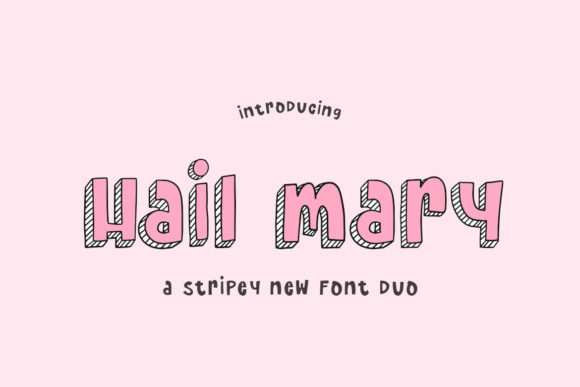
The Hail Mary font is a standout in the world of display typography, known for its bold and chunky letterforms that make a strong visual impact. Designed with a modern aesthetic, it’s ideal for those who want to convey confidence and creativity through their text. Whether used in branding, design projects, or digital content, Hail Mary offers a unique way to stand out without sacrificing readability.
What Makes Hail Mary Unique?
Hail Mary is more than just another display font—it's a statement. Its chunky, geometric style gives it a sense of strength and immediacy, making it perfect for headlines, logos, and other prominent text elements. Unlike many fonts that rely on subtle curves and serifs, Hail Mary uses sharp angles and solid fills to create a bold, eye-catching appearance.
The font’s design is rooted in modern minimalism, yet it retains a playful edge that makes it feel approachable. This balance between seriousness and fun allows Hail Mary to work across a wide range of applications, from high-energy campaigns to more subdued creative projects.
Comparing Hail Mary to Similar Fonts
When considering Hail Mary, it’s helpful to compare it with other display fonts that share similar characteristics. For instance, fonts like Impact and BeVietnam Pro are often used in similar contexts, but they each have distinct features that set them apart.
Hail Mary shares some similarities with Impact in terms of its boldness and simplicity, but it lacks the heaviness and sometimes overwhelming presence of that classic font. Instead, Hail Mary offers a more refined and balanced look that still commands attention without being too aggressive.
In contrast, Hail Mary is less rigid than fonts like Montserrat or Roboto, which are more commonly used in body text. While these fonts are versatile and widely used, they lack the visual punch that Hail Mary brings to the table when used as a display font.
Strengths and Tradeoffs
One of the key strengths of Hail Mary is its ability to convey energy and confidence. It’s particularly effective in situations where you want your message to be noticed quickly—such as in posters, social media graphics, or website headers.
However, this same boldness can also be a limitation. Because of its chunky design, Hail Mary may not be the best choice for long-form text or content that requires fine detail. The font’s heavy weight and limited character spacing can make it difficult to read in smaller sizes or when used in extended paragraphs.
Additionally, while Hail Mary is visually striking, it may not always align with the tone or style of every project. For example, a professional business report might benefit from a more traditional serif font, whereas a music festival poster could thrive with the energetic look of Hail Mary.
Best-Fit Situations for Hail Mary
Hail Mary is most effective when used in short, impactful text. It shines in scenarios such as:
- Headlines and titles for creative projects
- Logos and brand identity elements
- Social media posts and promotional graphics
- Event banners and signage
- Design layouts that require a strong visual anchor
In these cases, the font’s boldness and clarity help draw attention and reinforce the message. Its chunky structure also adds a sense of dynamism that can enhance the overall design.
When to Consider Alternatives
While Hail Mary is an excellent choice for certain applications, there are situations where other fonts might be more appropriate. For instance:
- If you need a more readable font for body text, consider options like Open Sans or Lato.
- If you're looking for a more elegant or sophisticated look, Playfair Display or Merriweather might be better suited.
- For a softer, more rounded appearance, Quicksand or Poppins offer a good alternative.
Choosing the right font depends on the context, audience, and purpose of your project. Hail Mary is a powerful tool, but it’s not the only one available.
Realistic Examples and Practical Comparisons
To better understand how Hail Mary performs in real-world scenarios, let’s consider a few examples:
Imagine a music festival poster. Using Hail Mary for the headline would immediately grab attention and set the tone for the event. In contrast, using a more traditional font might make the poster feel less dynamic and engaging.
Another example is a product launch announcement. A bold, chunky font like Hail Mary can help communicate excitement and urgency, making it an ideal choice for headlines and call-to-action buttons.
On the other hand, if you’re designing a corporate website, you might find that Hail Mary is too flashy for the main content. In such cases, pairing it with a more neutral body font can create a balanced and professional look.
Making an Informed Decision
When deciding whether to use Hail Mary, it’s important to evaluate your specific needs and goals. Ask yourself questions like:
- What is the primary purpose of the text?
- Who is the target audience?
- What tone and style do I want to convey?
- Will the font be used in isolation or alongside other design elements?
By carefully considering these factors, you can determine whether Hail Mary is the right fit for your project or if another font might be more suitable.
Ultimately, Hail Mary is a versatile and stylish option that can elevate your design work. However, it’s essential to use it thoughtfully and in the right context to ensure it enhances rather than detracts from your message.